Buy madonna.eu ?
We are moving the project
madonna.eu .
Are you interested in purchasing the domain
madonna.eu ?
domain@kv-gmbh.de · 0541-91531010
Buy madonna.eu ?
What does the H-method bring?
The H-method, also known as the Harvard method, brings a structured and systematic approach to research and writing. It emphasizes the importance of thorough research, critical analysis, and proper citation of sources. By following the H-method, writers can ensure that their work is well-researched, well-organized, and properly supported by evidence. This method also helps to avoid plagiarism and maintain academic integrity. **
What is method 3 in math H?
Method 3 in math H refers to the third approach or technique used to solve a problem or equation. It could involve using a specific formula, algorithm, or strategy to find a solution. In math H, students are often taught multiple methods to solve problems, allowing them to choose the most efficient or suitable approach for a given situation. Method 3 may vary depending on the specific topic or concept being studied in the course. **


Similar search terms for H-method
Top-Angebote
Products related to H-method:
-
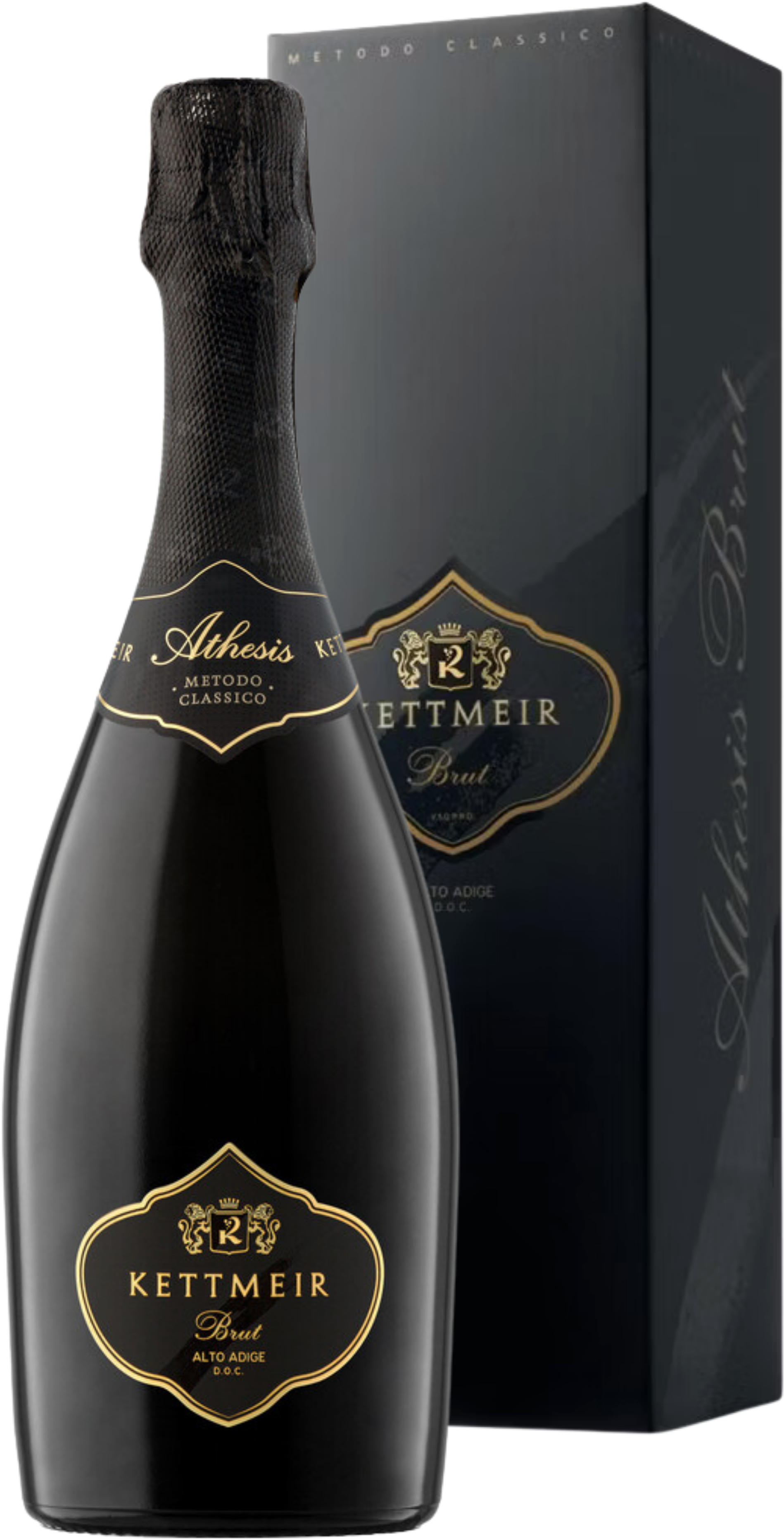
Classic Method Sparkling Brut 'Athesis' Kettmeir 2022 (Packaging)The Classic Method Sparkling Brut "Athesis" from the Kettmeir winery is a wonderful example of how splendid sparkling wines can be found in the shadow of the South Tyrolean Dolomites: Chardonnay, Pinot Bianco and Pinot Nero blend together to create a wine with vibrant elegance and profound smoothness. The vineyards, cultivated using pergola and espalier training systems, are located at an altitude of no more than 700 metres above sea level on calcareous-clayey soils where the Ora del Garda wind caresses the fruit in summer, helping it to reach perfect ripeness.The history of Kettmeir's "Athesis" Brut Classic Method Sparkling wine begins in mid-September, coinciding with the start of the harvest season. Once harvested, the Chardonnay, Pinot Bianco and Pinot Nero grapes are transferred to the cellar to be vinified separately, awaiting fermentation at around 14-16 °C. The wine is then refermented in the bottle and disgorged according to the principles of the Classic Method. Finally, the production process concludes with 24 months of ageing, spent entirely on the lees in the bottle.Kettmeir's Sparkling wine "Athesis" fills the glass with a bright straw yellow colour defined by fine, persistent bubbles. White fruits and notes of grapefruit and lime open the dance of the bouquet, where jasmine and the fragrance of bread crust close the gentle profile of this exciting South Tyrolean sparkling wine. Soft, creamy and with lively, cheerful bubbles, it is magnetically pleasant to drink, consistent with the aromas perceived by the nose, with citrus notes and great balance. The 'Athesis' sparkling wine brings with it the freshness that only the Dolomites can offer, making it an excellent companion for an aperitif, but it can also enhance light risottos or medium-intensity fish dishes. A Metodo Classico to be enjoyed down to the last bubble.29,00 £*Shipping: 48,00 £Secure redirect to the provider
-
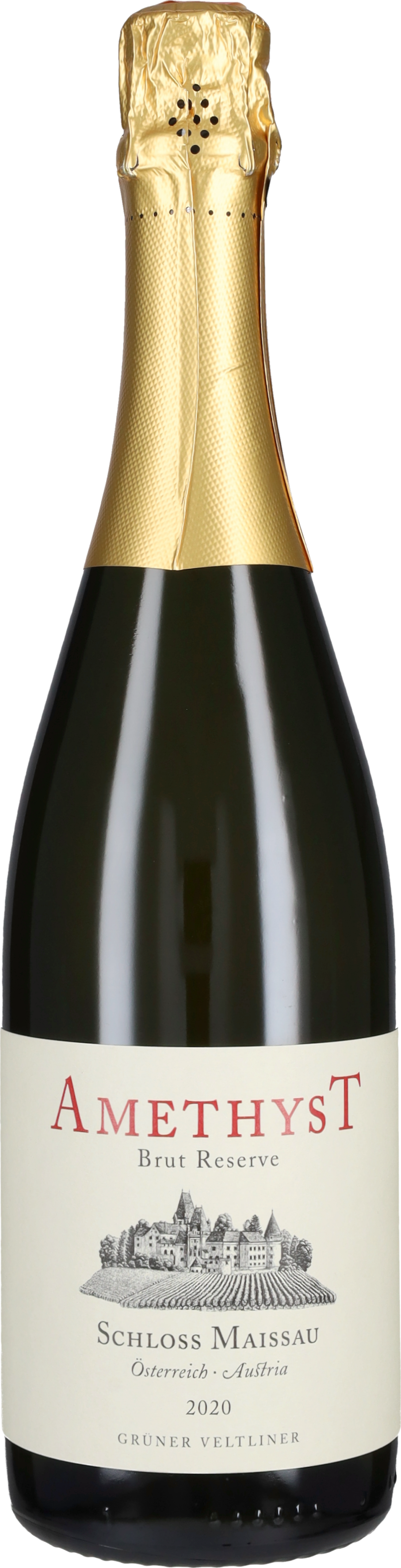
Classic Method Brut Gruner Veltliner 'Amethyst' Schloss MaissauThe Brut Grüner Veltliner 'Ametyst' sparkling wine from the Austrian estate Schloss Maissau is a young and fragrant Classic Method wine, which mainly aims to highlight the fruity characteristics and the pleasant expressive immediacy of the most cultivated grape variety in the country. Thanks to careful vineyard management and rigorous and precise winemaking, Grüner Veltliner demonstrates remarkable oenological versatility and also excellent sparkling characteristics. It captivates with its citrusy sip, its floral notes, and white-fleshed fruit, crossed by a clear mineral freshness.The ‘Ametyst’ Classic Method Brut Grüner Veltliner is an excellence of the Schloss Maissau winery, located near the castle of Maissau in Manhartsberg, in one of the areas with the oldest traditions of Austrian viticulture, which already in the 12th century produced wine with the native grape variety Grüner Veltliner. The estate extends over 7 hectares, all managed according to the principles of organic farming, certified since 2017. The vineyards are about 50 years old and are cultivated at an altitude of 350 meters above sea level, with an east-facing exposure. The soils are composed of sandstones and sandy loess, rich in mineral elements. The climate is particularly cool with good temperature variations. After the gentle pressing of the grapes, the must ferments in temperature-controlled stainless steel tanks. The second fermentation takes place in the bottle according to the Classic Method, with a resting period on the lees for 12 months.The Classic Method Brut ‘Ametyst’ Grüner Veltliner Schloss Maissau is an interesting bottle, perfect to taste at aperitif time or to accompany delicate-flavored appetizers. With a lively bright straw yellow color, crossed by a lively, delicate, and continuous perlage, it expresses citrus notes of lime and grapefruit, fragrant aromas of white-fleshed fruit, Golden apple, peach, cantaloupe, floral nuances, and aromatic herbs. The attack on the palate is lively and intense with ripe fruit in the foreground, which unfolds harmoniously towards a savory finish and vibrant freshness.33,00 £*Shipping: 48,00 £Secure redirect to the provider
-
What is the difference quotient h-method?
The difference quotient h-method is a numerical method used to approximate the derivative of a function. It involves calculating the average rate of change of the function over a small interval by taking the difference of function values at two points and dividing by the difference in their x-coordinates. The h in the method refers to the small interval over which the average rate of change is calculated. By taking the limit as h approaches 0, the method provides an approximation of the derivative at a specific point. This method is commonly used in numerical analysis and calculus to estimate derivatives when an exact formula is not available. **
-
How do you apply the h-method in the finite difference method?
In the finite difference method, the h-method involves dividing the domain into a grid with spacing h. This grid is used to discretize the differential equations and approximate the derivatives at each grid point. The h-method is applied by replacing the derivatives in the differential equations with their finite difference approximations, such as central difference, forward difference, or backward difference, depending on the specific problem. The resulting system of algebraic equations can then be solved numerically to obtain an approximate solution to the original differential equations. The choice of h affects the accuracy and convergence of the finite difference method, with smaller h leading to a more accurate solution but also requiring more computational resources. **
-
How often should the method h be applied?
The method h should be applied as often as needed to achieve the desired outcome. This could vary depending on the specific situation and the complexity of the problem being addressed. It is important to regularly assess progress and adjust the application of the method as necessary to ensure effectiveness. Regularly applying the method h can help maintain focus and momentum towards reaching the desired goal. **
-
Where is my mistake in the H-method?
It's difficult to pinpoint the exact mistake without more context, but some common mistakes in the H-method include not properly identifying the key factors that contribute to the problem, not thoroughly analyzing the root causes of the issue, and not effectively prioritizing the identified factors for resolution. It's important to carefully follow the steps of the H-method and ensure that all relevant information is considered in order to accurately diagnose and address the problem. Additionally, it's important to involve all relevant stakeholders in the process to gain a comprehensive understanding of the issue. **
How do you calculate with the h-method?
The h-method is a numerical technique used to approximate solutions to differential equations or integrals. To calculate with the h-method, you first divide the domain of the problem into smaller subintervals of equal length, denoted as h. Then, you approximate the solution within each subinterval using a chosen method, such as finite differences or finite elements. Finally, you combine the solutions from each subinterval to obtain an overall approximation for the entire domain. The accuracy of the approximation can be improved by decreasing the size of the subintervals (decreasing h) and recalculating the solution. **
At the end of the method Math H, is there no longer an H?
At the end of the method Math H, there is no longer an H. The method likely performs some operation on the variable H, which could result in its value being changed or removed altogether. Once the method is finished executing, the H variable may no longer exist or may have a different value than it did before the method was called. **
Top-Angebote
Products related to H-method:
-
Metro 17cm H Glass Oval Pendant Shade ( No Direct Attachment Method ) Pink 17cm H X 30cm W X 30cm DContemporary and sleek easy-fit soft lilac moulded glass pendant lamp shade with line ribbed etched body. Simply attaches to your existing pendant cable. This flat oval designer shade is perfect for kitchens, dining rooms, lounges and commercial/business settings including bars and restaurants. Total product dimensions: Height - 17cm, Width - 30cm, Depth: 30cm. Maximum wattage allowed is 11w. Please note that ceiling rose and cable is not included - pendant shade only is being sold. Complete with shade reducer ring allowing for most lamp bases - B22/BC, E14/SES and E27/ES. Light bulb is not included. Metro Lane Colour: Pink44,99 £*Shipping: 4,99 £Secure redirect to the provider
-
Classic Method Sparkling Brut 'Athesis' Kettmeir 2022 (Packaging)The Classic Method Sparkling Brut "Athesis" from the Kettmeir winery is a wonderful example of how splendid sparkling wines can be found in the shadow of the South Tyrolean Dolomites: Chardonnay, Pinot Bianco and Pinot Nero blend together to create a wine with vibrant elegance and profound smoothness. The vineyards, cultivated using pergola and espalier training systems, are located at an altitude of no more than 700 metres above sea level on calcareous-clayey soils where the Ora del Garda wind caresses the fruit in summer, helping it to reach perfect ripeness.The history of Kettmeir's "Athesis" Brut Classic Method Sparkling wine begins in mid-September, coinciding with the start of the harvest season. Once harvested, the Chardonnay, Pinot Bianco and Pinot Nero grapes are transferred to the cellar to be vinified separately, awaiting fermentation at around 14-16 °C. The wine is then refermented in the bottle and disgorged according to the principles of the Classic Method. Finally, the production process concludes with 24 months of ageing, spent entirely on the lees in the bottle.Kettmeir's Sparkling wine "Athesis" fills the glass with a bright straw yellow colour defined by fine, persistent bubbles. White fruits and notes of grapefruit and lime open the dance of the bouquet, where jasmine and the fragrance of bread crust close the gentle profile of this exciting South Tyrolean sparkling wine. Soft, creamy and with lively, cheerful bubbles, it is magnetically pleasant to drink, consistent with the aromas perceived by the nose, with citrus notes and great balance. The 'Athesis' sparkling wine brings with it the freshness that only the Dolomites can offer, making it an excellent companion for an aperitif, but it can also enhance light risottos or medium-intensity fish dishes. A Metodo Classico to be enjoyed down to the last bubble.29,00 £*Shipping: 48,00 £Secure redirect to the provider
-
Classic Method Brut Gruner Veltliner 'Amethyst' Schloss MaissauThe Brut Grüner Veltliner 'Ametyst' sparkling wine from the Austrian estate Schloss Maissau is a young and fragrant Classic Method wine, which mainly aims to highlight the fruity characteristics and the pleasant expressive immediacy of the most cultivated grape variety in the country. Thanks to careful vineyard management and rigorous and precise winemaking, Grüner Veltliner demonstrates remarkable oenological versatility and also excellent sparkling characteristics. It captivates with its citrusy sip, its floral notes, and white-fleshed fruit, crossed by a clear mineral freshness.The ‘Ametyst’ Classic Method Brut Grüner Veltliner is an excellence of the Schloss Maissau winery, located near the castle of Maissau in Manhartsberg, in one of the areas with the oldest traditions of Austrian viticulture, which already in the 12th century produced wine with the native grape variety Grüner Veltliner. The estate extends over 7 hectares, all managed according to the principles of organic farming, certified since 2017. The vineyards are about 50 years old and are cultivated at an altitude of 350 meters above sea level, with an east-facing exposure. The soils are composed of sandstones and sandy loess, rich in mineral elements. The climate is particularly cool with good temperature variations. After the gentle pressing of the grapes, the must ferments in temperature-controlled stainless steel tanks. The second fermentation takes place in the bottle according to the Classic Method, with a resting period on the lees for 12 months.The Classic Method Brut ‘Ametyst’ Grüner Veltliner Schloss Maissau is an interesting bottle, perfect to taste at aperitif time or to accompany delicate-flavored appetizers. With a lively bright straw yellow color, crossed by a lively, delicate, and continuous perlage, it expresses citrus notes of lime and grapefruit, fragrant aromas of white-fleshed fruit, Golden apple, peach, cantaloupe, floral nuances, and aromatic herbs. The attack on the palate is lively and intense with ripe fruit in the foreground, which unfolds harmoniously towards a savory finish and vibrant freshness.33,00 £*Shipping: 48,00 £Secure redirect to the provider
-
What does the H-method bring?
The H-method, also known as the Harvard method, brings a structured and systematic approach to research and writing. It emphasizes the importance of thorough research, critical analysis, and proper citation of sources. By following the H-method, writers can ensure that their work is well-researched, well-organized, and properly supported by evidence. This method also helps to avoid plagiarism and maintain academic integrity. **
-
What is method 3 in math H?
Method 3 in math H refers to the third approach or technique used to solve a problem or equation. It could involve using a specific formula, algorithm, or strategy to find a solution. In math H, students are often taught multiple methods to solve problems, allowing them to choose the most efficient or suitable approach for a given situation. Method 3 may vary depending on the specific topic or concept being studied in the course. **
-
What is the difference quotient h-method?
The difference quotient h-method is a numerical method used to approximate the derivative of a function. It involves calculating the average rate of change of the function over a small interval by taking the difference of function values at two points and dividing by the difference in their x-coordinates. The h in the method refers to the small interval over which the average rate of change is calculated. By taking the limit as h approaches 0, the method provides an approximation of the derivative at a specific point. This method is commonly used in numerical analysis and calculus to estimate derivatives when an exact formula is not available. **
-
How do you apply the h-method in the finite difference method?
In the finite difference method, the h-method involves dividing the domain into a grid with spacing h. This grid is used to discretize the differential equations and approximate the derivatives at each grid point. The h-method is applied by replacing the derivatives in the differential equations with their finite difference approximations, such as central difference, forward difference, or backward difference, depending on the specific problem. The resulting system of algebraic equations can then be solved numerically to obtain an approximate solution to the original differential equations. The choice of h affects the accuracy and convergence of the finite difference method, with smaller h leading to a more accurate solution but also requiring more computational resources. **
Similar search terms for H-method
-
How often should the method h be applied?
The method h should be applied as often as needed to achieve the desired outcome. This could vary depending on the specific situation and the complexity of the problem being addressed. It is important to regularly assess progress and adjust the application of the method as necessary to ensure effectiveness. Regularly applying the method h can help maintain focus and momentum towards reaching the desired goal. **
-
Where is my mistake in the H-method?
It's difficult to pinpoint the exact mistake without more context, but some common mistakes in the H-method include not properly identifying the key factors that contribute to the problem, not thoroughly analyzing the root causes of the issue, and not effectively prioritizing the identified factors for resolution. It's important to carefully follow the steps of the H-method and ensure that all relevant information is considered in order to accurately diagnose and address the problem. Additionally, it's important to involve all relevant stakeholders in the process to gain a comprehensive understanding of the issue. **
-
How do you calculate with the h-method?
The h-method is a numerical technique used to approximate solutions to differential equations or integrals. To calculate with the h-method, you first divide the domain of the problem into smaller subintervals of equal length, denoted as h. Then, you approximate the solution within each subinterval using a chosen method, such as finite differences or finite elements. Finally, you combine the solutions from each subinterval to obtain an overall approximation for the entire domain. The accuracy of the approximation can be improved by decreasing the size of the subintervals (decreasing h) and recalculating the solution. **
-
At the end of the method Math H, is there no longer an H?
At the end of the method Math H, there is no longer an H. The method likely performs some operation on the variable H, which could result in its value being changed or removed altogether. Once the method is finished executing, the H variable may no longer exist or may have a different value than it did before the method was called. **
* All prices are inclusive of VAT and, if applicable, plus shipping costs. The offer information is based on the details provided by the respective shop and is updated through automated processes. Real-time updates do not occur, so deviations can occur in individual cases. ** Note: Parts of this content were created by AI.